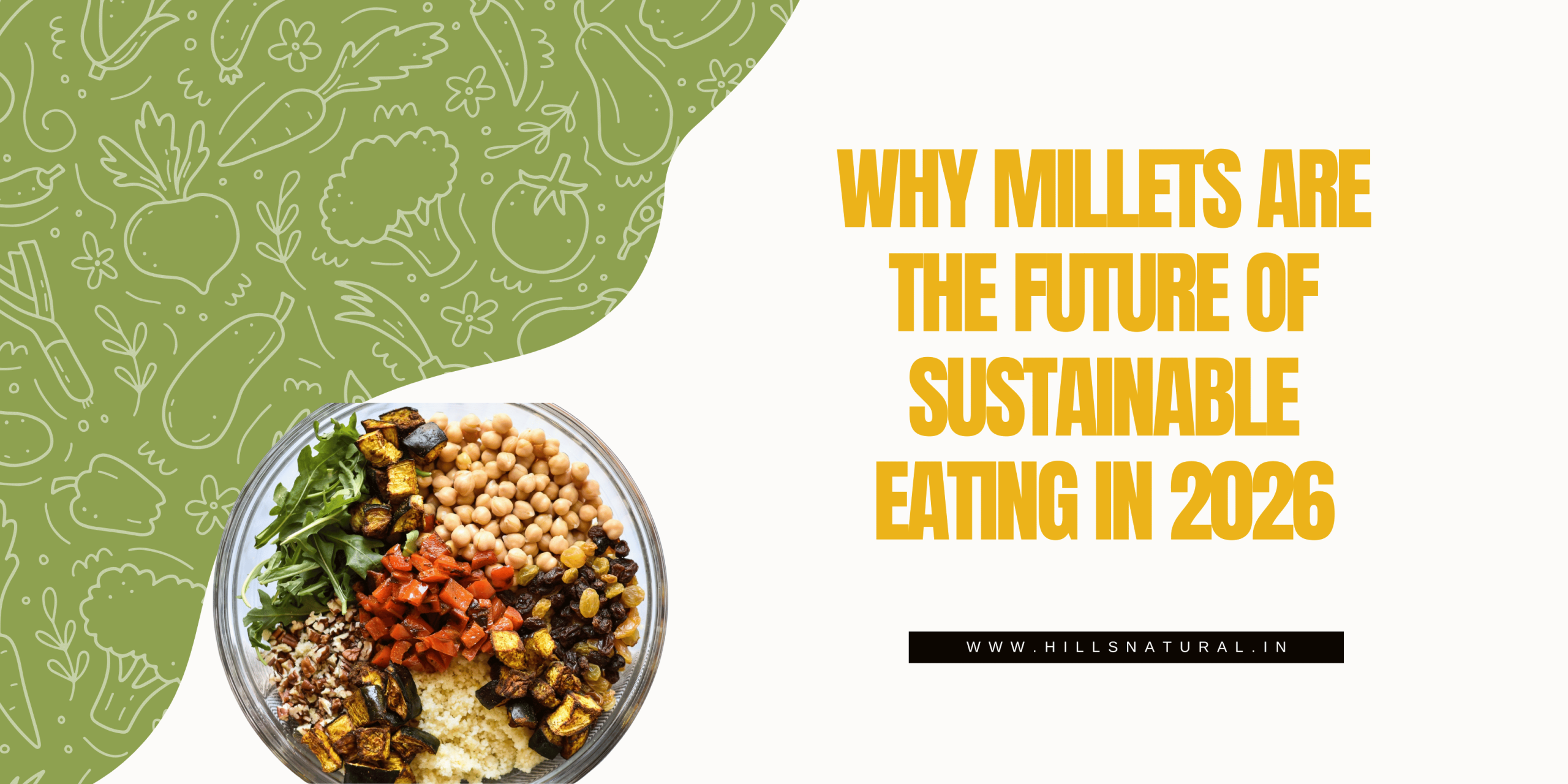
Introduction: Why Millets Are the Future of Sustainable Eating in 2026
As climate change accelerates and global diets shift toward more eco-friendly choices, many nutritionists and environmental experts emphasise why millets are the future of sustainable eating in 2026. These ancient grains are making a modern comeback because they offer unmatched resilience, nutrition, and sustainability benefits that today’s consumers care deeply about.
Millets and Sustainable Eating in 2026: A Climate-Resilient Solution
One of the strongest reasons positive millets are the future of sustainable eating in 2026 is their natural ability to thrive in challenging climates. They require 70–80% less water than wheat and rice, grow well in drought-prone areas, and need minimal fertilisers.
This makes them a powerful crop for:
- Water-scarce regions
- Climate-affected farmlands
- Low-input sustainable farming systems
As governments promote climate-smart agriculture, millets fit perfectly into resilient food production strategies.
The Nutrition Advantage: Why Millets Matter for Health in 2026
The global rise in lifestyle diseases has shifted focus toward whole-grain, high-fiber foods. Millets deliver exactly that.
They are rich in:
- Fiber for digestion and weight management
- Protein for muscle and metabolic health
- Iron, calcium, magnesium for overall wellbeing
- Low glycemic index, making them ideal for diabetes-friendly diets
In 2026, as consumers prioritize clean and functional foods, millets stand out as a superior nutritional choice.
Cultural Revival and Modern Innovation Around Millets
Another reason millets are the future of sustainable eating in 2026 is their seamless fit into both traditional and modern cuisines.
From millet dosa and rotis to millet bowls, energy bars, and bakery items, food brands worldwide are reinventing these grains for a new generation.
You’ll now find millets in:
This innovation wave is increasing consumer acceptance and expanding millet-based food markets globally.
Environmental Impact: How Millets Support a Greener Planet
Millets contribute directly to sustainable eating because they:
- Reduce carbon footprints
- Grow without heavy irrigation infrastructure
- Support soil health and biodiversity
- Prevent land degradation
By choosing millets, consumers actively support environmentally responsible food systems.
Conclusion: Why Millets Are the Future of Sustainable Eating in 2026
In 2026, sustainability, nutrition, and climate resilience are top priorities—and millets check every box. Their low environmental impact, rich nutritional profile, and adaptability to modern food trends clearly show why millets are the future of sustainable eating in 2026.
As more people and businesses embrace these powerful grains, millets are set to play a major role in shaping a healthier and greener global diet.